

Engineering Intelligent Analytics Platforms
HiFX helps enterprises build scalable data analytics platforms that unify enterprise intelligence, accelerate real-time insights, and enable smarter business decisions through cloud-native engineering, AI-driven analytics, and modern data ecosystems.Talk to Us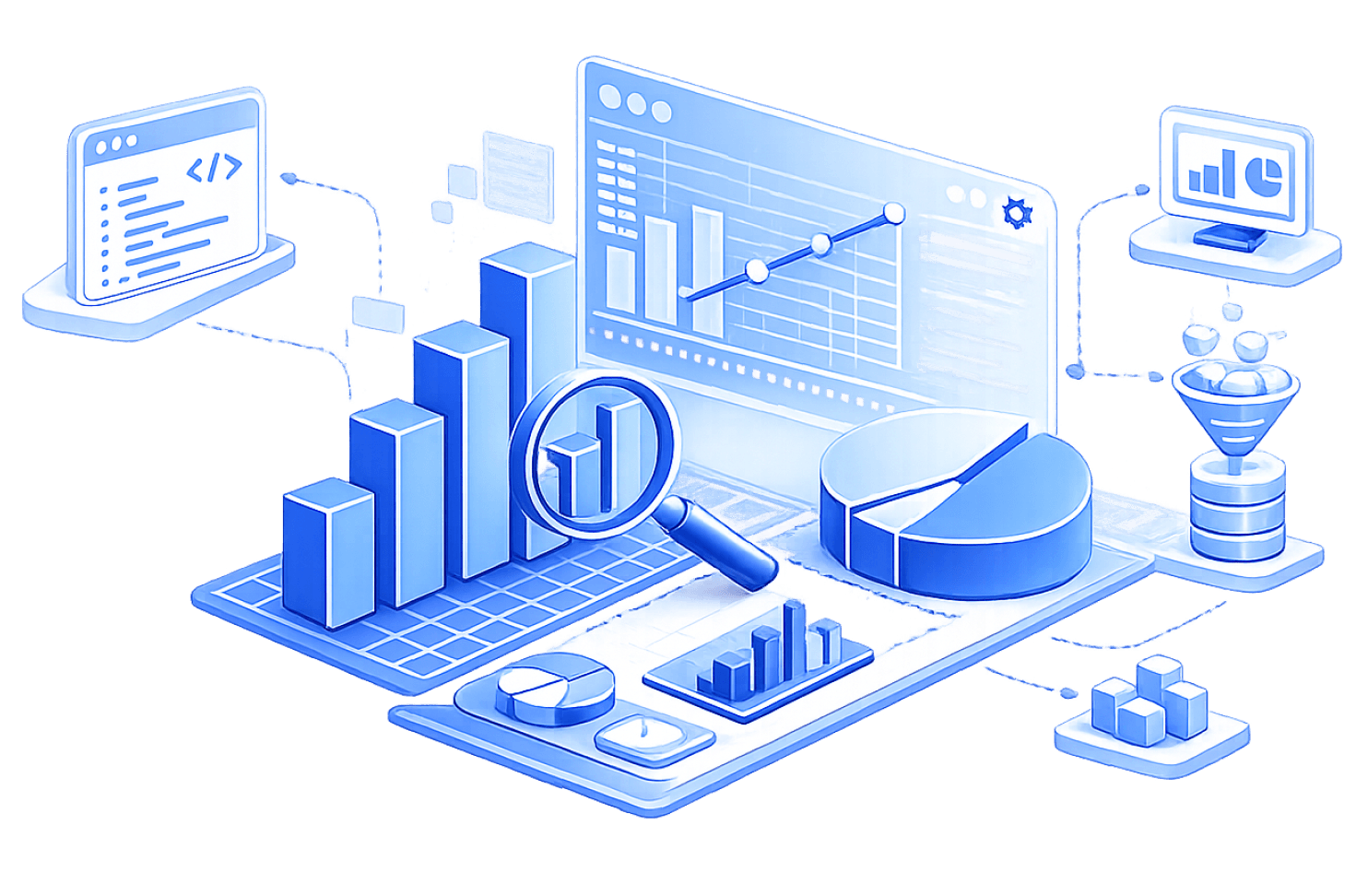
Intelligent Analytics Engineering. Built for Growth.
An analytics platform is only as trustworthy as the semantic layer underneath it — the shared definitions that make sure 'revenue' means the same thing whether it's viewed in a dashboard, an export, or an API. We build that layer deliberately, alongside the dashboards themselves, so teams aren't reconciling three different numbers for what should be one metric.
 Shared Metric Definitions
 Consistent Reporting
 Purpose-Built Visualizations
Full-Spectrum Analytics Platform Engineering

Analytics Platform Development
We evaluate BI tooling (Looker, Power BI, Tableau, or a custom-built dashboard) against how technical your actual users are — a semantic layer with self-serve querying suits analysts; a curated set of fixed dashboards suits executive audiences who need answers, not query builders.

Real-Time Dashboards
Real-time' gets used loosely — we clarify upfront whether a business actually needs sub-second latency or whether a 5-minute refresh is functionally real-time for the decisions being made, since the former is significantly more expensive to build and operate.

Data Visualization Systems
Chart type is chosen for what the data actually needs to communicate — a trend over time needs a line chart, a comparison across categories needs a bar chart. We push back on visualizations chosen for visual appeal over clarity.

AI & Predictive Analytics
Forecasting models are only as good as the historical data feeding them — we assess data quality and volume honestly before committing to a predictive approach, rather than promising accuracy a thin dataset can't support.

Cloud Analytics Infrastructure
We separate the compute layer (query engines) from storage (the warehouse or lake) so each can scale independently — a spike in dashboard usage shouldn't require re-provisioning the underlying data storage.

Enterprise Data Integration
Integration is designed around data freshness requirements per source — a CRM might sync hourly while financial data syncs nightly, based on how quickly each actually needs to reflect in reporting.
Our Process

Assessment
Understand who actually consumes the analytics (executives, analysts, operational teams) and what decisions the data informs — this shapes tooling choice more than technical preference does.

Architecture
Design the semantic layer and dashboard architecture around those consumption patterns.
Development
Build dashboards and integrations iteratively, validating against real user questions rather than a spec written in isolation.
Optimization
Track which dashboards actually get used and refine or retire the ones that don't, rather than letting unused reports accumulate.
Transforming Businesses Through Technology
Mobile Application & Admin Panel
HiFX designed and developed a scalable mobile application and centralized admin panel for a leading national bakery and café chain, simplifying operations and improving customer accessibility.
 ·
· ·
· ·
· ·
· ·
·

Lens
HiFX designed and developed a digital platform to simplify lens inventory management, improve operational efficiency, and enable real-time visibility across retail operations.
 ·
· ·
· ·
· ·
· ·
·
Payment Application
HiFX designed and developed a secure payment application to simplify digital transactions, improve operational efficiency, and deliver seamless payment experiences through scalable cloud-native infrastructure.
··
Single Sign On
HiFX designed and developed a centralized Single Sign-On solution to streamline authentication workflows, improve security, and deliver seamless access management across enterprise applications and platforms.
· ·
· ·
· ·
· ·
·
Questions We Get Asked
Platforms built around a consistent semantic layer, so the same metric means the same thing whether viewed in a dashboard, an export, or an API response.
Yes — with sync frequency per source matched to how quickly that data actually needs to reflect in reporting, rather than syncing everything on the same schedule regardless of need.

